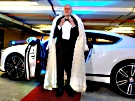

FUTURE LEGEND
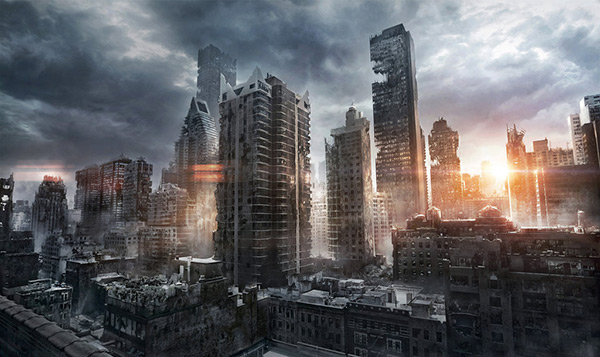
Hunger City - 2038
And in the death, as the last few corpses lay
Rotting on the slimy thoroughfare
The shutters lifted in inches
In Temperance Building high on Poacher's Hill
And red mutant eyes gaze down on Hunger City
No more big wheels.
Fleas the size of rats sucked on rats the size of cats
And ten thousand peoploids split into small tribes
Coveting the highest of the sterile skyscrapers
Like packs of dogs assaulting the glass fronts of Love-Me Avenue
Ripping and rewrapping mink and shiny silver fox, now legwarmers
Family badge of sapphire and cracked emerald, any day now
The year of the Diamond Dogs.
THIS AIN'T ROCK N' ROLL
THIS IS GENOCIDE!
Introduction
For some reason or another, you’ve found yourself inside a dusty looking saloon on the outskirts of Hunger City. Maybe you wanted a drink, a place to sit down, or simply a respite from the dust-storm raging outside, not that you found it. The door in this place doesn’t quite shut, offering glimpses of the sepia-toned outside. Sometimes, another person will wander in, sit down at the bar, and order up their favourite poison. The patrons here don’t look too friendly, but no one’s caused any trouble yet. The strums of a guitar and the croaks of an ageing singer complete the setting, and you find yourself almost drifting into a world of your own. That is, of course, until the air raid sirens start. All eyes turn towards the ancient television, as the bartender dusts it off. It seems that The Duke, the ruler of what remains of New York, has an announcement to make...
Proclamation
THE FOLLOWING INFORMATION IS BROUGHT TO YOU BY OUR GLORIOUS LEADER, THE DUKE:
The apocalypse happened in 1977. No-one is quite sure what occurred, or what even caused it. People woke up some day to discover a new world, a broken world. Mountains had been flattened, seas emptied. The cities were decaying ruins. Organised government was but a distant memory.
At first, people tried to continue as though nothing had happened, containing themselves within their own individual bubbles of self. However, sustaining that delusion was a different matter. Eventually, as readily-available food supplies dwindled, people turned to violence. That is simply human nature. When scared, when hungry, when leaderless, people lash out, reverting to a bestial state. What separates humans from animals, if not organisation and leadership? When humans are not organised and are without leadership, what makes them any more than animals? After these short months of ravaging violence, people were drawn slowly back into society, as they should be. They formed small, close-nit polities, the strongest of which would go on to dominate their neighbours. This confused, multi-polar situation, however, provoked even more violence and a general feeling of paranoia, as these bands warred with each other, absorbing members from those tribes they defeated. When there is no clear leader on the international stage, the situation is just as destructive as when there is no clear leader on a sub-unit level.
Eventually, on the coasts of the American supercontinent, these warring tribes coalesced into minor city-states, a sad imitation of the civilisation they were replacing, city-states which could perhaps be considered a mockery of Ancient Athens or Sparta. The largest and most powerful of these city-states were New York, Detroit and Seattle. At first, New York, with its seat of power radiating out from Manhattan, was led by an idealist, President Presley. He had a kind heart, but his mind was closed the realities of life. By delegating power to the people, without first showing them how to guide and be guided, he exposed them to weakness and to danger. The results were disastrous.
His idealism naturally led to discord and civil war. Many factions competed amongst each other in the realms of politics, fighting in their senate halls as soldiers would have fought on a field of battle long ago. It was the people’s freedom which brought the fall of Presley and the fall of their government. Riven apart by division, given the freedom to assume more and more power, rather than defend their budding democracy, the people rejected it and destroyed it. The only thing that reigned was chaos and confusion.
Therefore, to stop this evil, I, the Duke, was forced to act. Rising from the war-torn ashes of our great city, amidst fallen skyscrapers, I did that which was necessary, and fought against the chaos, imparting order to the system. I stopped the violence. I brought an end to hunger. I bought the people time, so that they could once again learn how to rule themselves. I gave them a reason to live and a place in a new world.
However, all is not well in New York. As the people rebuild from the destruction wrought by factionalism and sham-democracy, murmurs of a vile rebellion among the criminal under-class grow. These vandals, who seek to drag New York back to our dark age of chaos, have organised themselves into cells, it is said. They call the great city Hunger City, in an attempt to denigrate my rule. These terrorists resent my good judgement and guidance, and must be destroyed. New York shall not be forced to go up a hill backwards! Nē Novum Eborācum Dēleātur!
Setting
Hidden:
Hidden:
Hidden:
Hidden:
Mechanics
Hidden:
Hidden:


